My father learned to carve from the Makonde people he lived among in Tanga.
He loved the work enough to open his own shop there, selling to tourists, and that shop is where I grew up. Before school I opened it with him. After school I came back to help him close it. In between he taught me the trade, and I found I loved it as much as he did.
A friend showed him photographs of Chemka one day: warm water, tourists arriving every morning, and nobody there selling carvings. He went north to see it, and began by spreading a Maasai shuka on the ground with his carvings laid out on it.
It was not easy. I was not from here, and some days nobody bought anything. But I never gave up. Seven years later I am still at this bench.

Why the name is Kitenge Arts
“Jina la biashara yangu linahusiana na mambo ya arts kwa sababu tunatengeneza vitu vya utamaduni, vitu vya asili kama kuchonga vinyago kwa miti ya mpingo, kutengeneza bracelets za aina ya shanga, na kuchora painting za canvas.”
In English: “My business name is tied to art because we make cultural things. Most of what we make is traditional work, carving sculptures from mpingo trees, making bracelets from all kinds of beads, and painting on canvas.”
That is still an accurate description of the workshop today. Kitenge is the cloth that Tanzanian life is dressed in, worn at births, weddings and funerals, and printed with patterns that carry meaning. Naming the workshop after it was a way of saying that what we sell is not decoration invented for visitors. It is the same craft our families have been practising at home.
From a village in Tanga to a spring in Kilimanjaro
-
Where it began
A carving shop in Tanga
Omary’s father learned to carve from the Makonde people he lived among in Tanga, and opened his own shop selling to tourists. Omary grew up in it, opening the shop before school and closing it after.
-
The photographs
A friend shows him Chemka
Warm water, tourists arriving every morning, and nobody selling carvings. His father travelled north to see it, and the village gave him a place to trade. He began with a Maasai shuka spread on the ground and his carvings laid out on it.
-
The first stall
Three hard months, then Kenya
For three months almost nobody bought, because nobody knew Chemka sold carvings. Then a group came from Kenya and bought nearly everything. With that money he built a small stall so the work no longer had to be carried in and out each day.
-
Corona
The tourists stopped coming
With no visitors there was no business. Father and son went home to Tanga and worked the farm until it passed.
-
Today
Seven years at the bench
They came back together with carvings, cloth, vikoi and paintings. After three months his father returned to Tanga to carve, and Omary stayed. Seven years on, the shop is still open and pieces made here have travelled home with visitors to New Zealand, Spain and France.
What our work is made from
Mpingo
African blackwood, Tanzania's national tree. It is dense, slow-growing and heavy enough to sink in water, which is why a finished carving holds a mirror polish without any varnish. The pale outer wood and the near-black heartwood in a single piece are natural, not stained.
Glass beads
Beadwork is a language. In Maasai tradition the colours carry meaning, red for courage, blue for the sky and the rain it brings, white for peace, green for the land after it has rained. Our beaders work these patterns by hand, one bead at a time.
Canvas and kitenge
Acrylic on stretched cotton canvas for the paintings. For clothing and bags we work with kitenge and Zanzibar fabrics chosen at the market, cut and sewn to measurement rather than bought in standard sizes.
Who makes the work
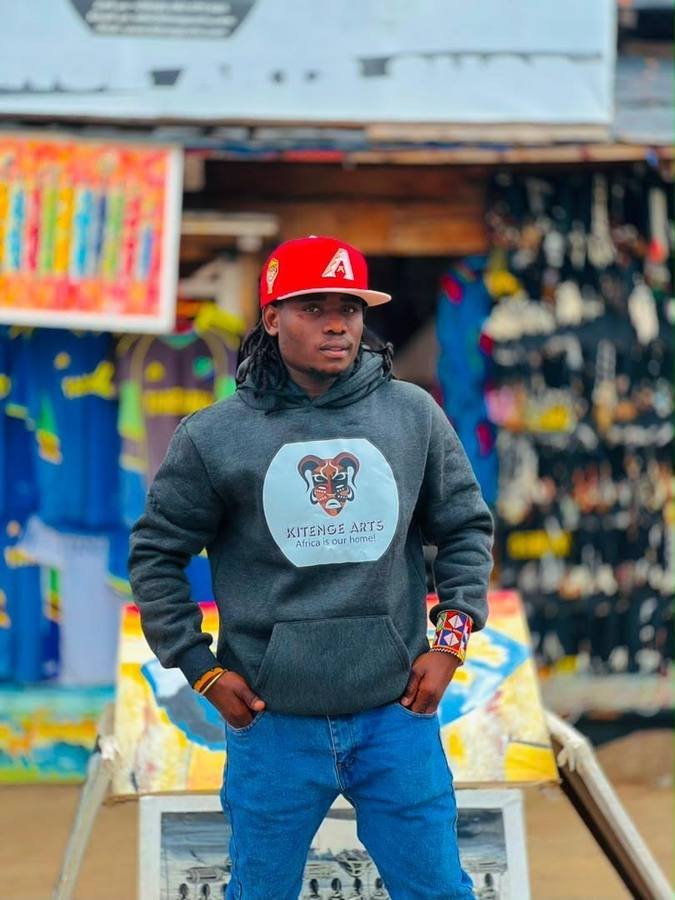
Kitenge Arts is a family and a small group of artists, not a factory. Different hands make different things, and all of them are here.
The carvings, by Omary’s father
He learned from the Makonde, opened his shop in Tanga, and still carves there today. The mpingo pieces sold at Chemka come from his hands.
The beadwork, by Omary and two artists
Collars, cuffs, bracelets and earrings, strung one bead at a time at the bench. Three pairs of hands, working in Maasai patterns.
The paintings
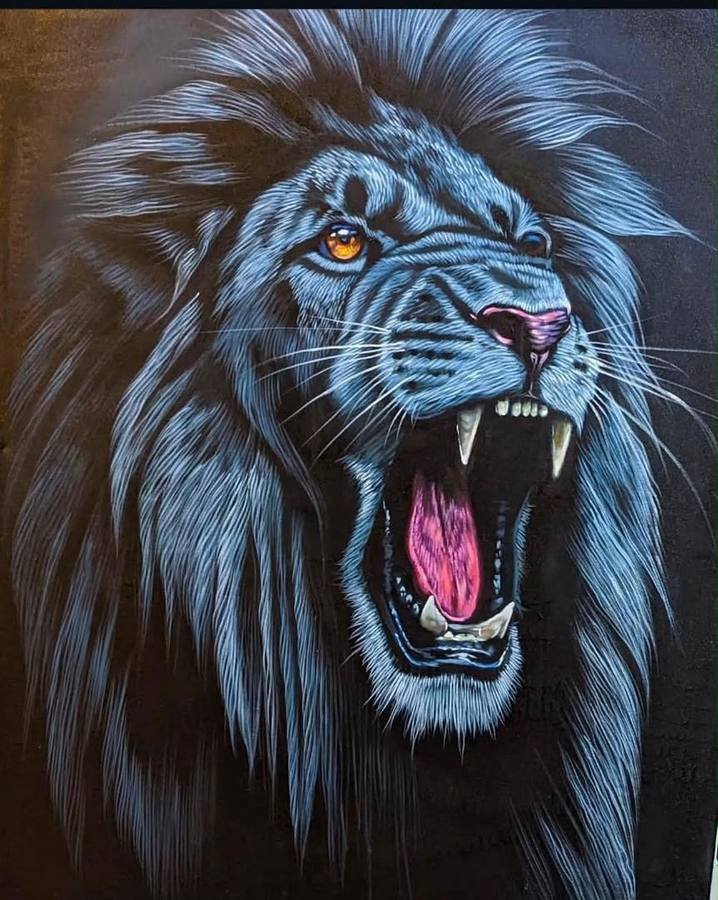
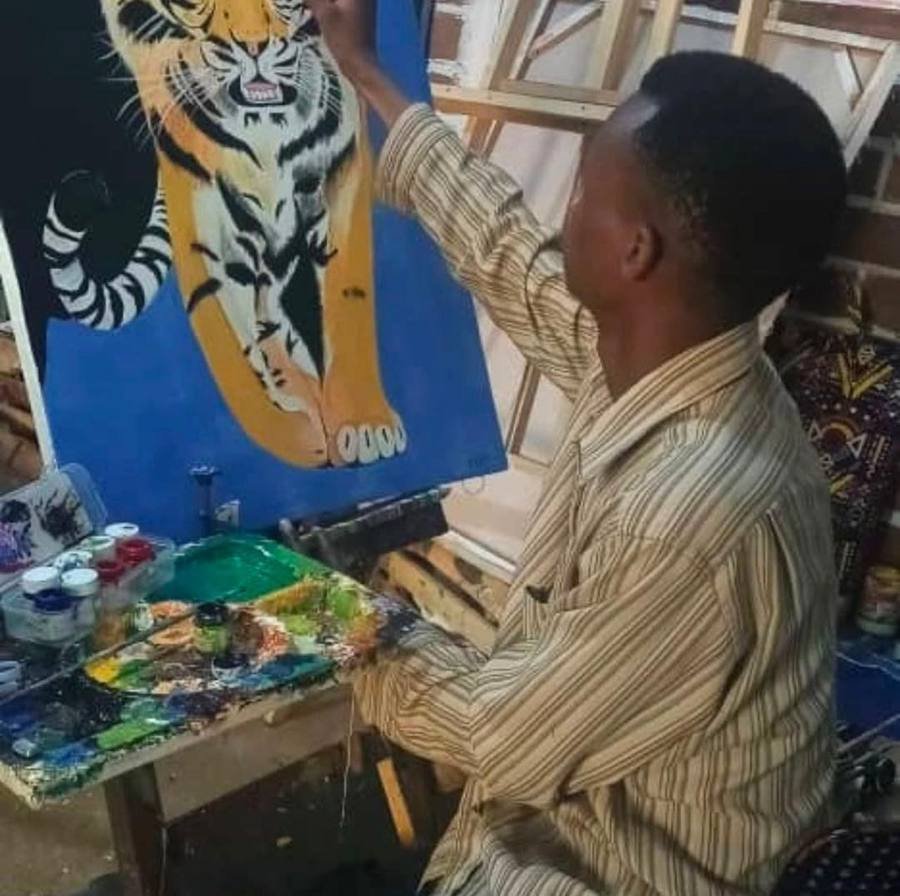
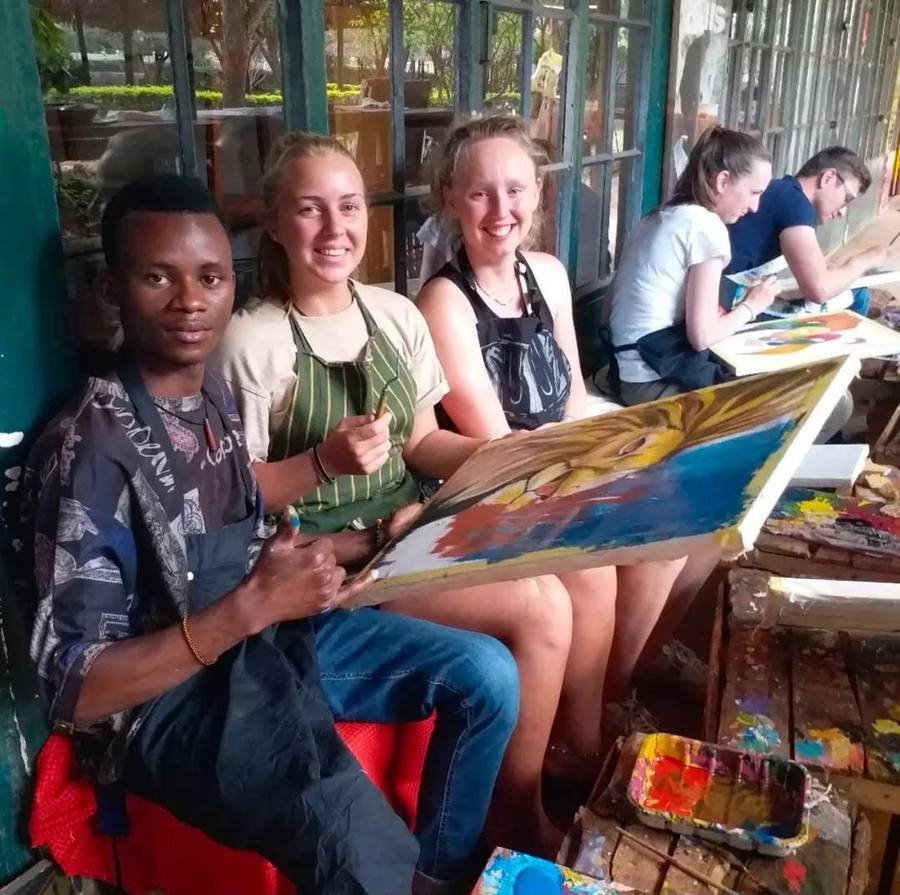
Acrylic on stretched canvas, worked hair by hair against black grounds. Every canvas is an original, and commissions are painted from your own photograph.

What happens when you come to the shop
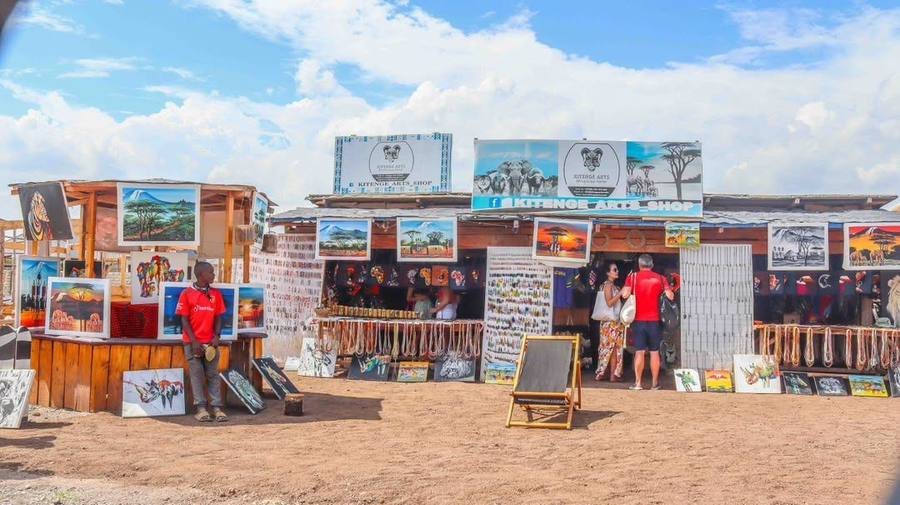
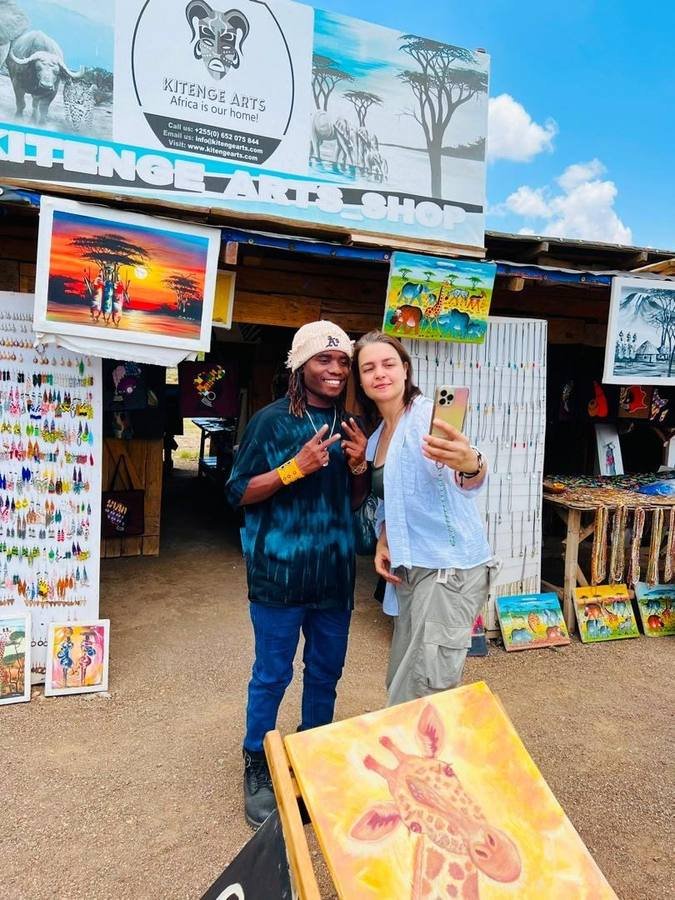
Chemka, also called Kikuletwa, is a pool of clear warm water rising out of the ground under fig trees at Boma Ng’ombe. Our shop stands at the entrance, open air, with no wall between the person making the work and the person buying it.
-
Swim first
The springs are the reason most people come. We are right there when you are done.
-
Watch the work
Beaders and painters are usually working. Ask what a pattern means and you will get a real answer.
-
Paint your own canvas
Sit down with brushes and acrylics. No experience needed. You take it home when it dries.
-
Take something with you
We wrap pieces for flights and hand luggage, or ship them to your country later.
People come in for one small souvenir and stay an hour. That is the intention. We would rather explain what a pattern means than make a fast sale.
What people say when the work reaches home
Messages sent to us after visitors got their pieces home, or after we posted them overseas.
Found a local artist. Looks like I am bringing home more than just magnets this time.
Thank you very much. It is beautiful. I will show you when it is hanging on the wall.
Oh, I love it! Thank you very much.
Our work has travelled to New Zealand, Spain and France
Most people carry their piece home themselves. Some see something after they have left and ask us to send it. Both are normal, and we have done both many times.
Wrapped for the flight
Carvings are padded and wrapped so they survive a hold. Canvases can be taken off the stretcher and rolled, which makes them light enough for hand luggage.
Sent to your country
We arrange shipping and tell you the cost before anything is sent. Nothing leaves the shop until you have agreed the figure.
Order from home
Message us on WhatsApp with the piece you want. We send current photographs, sizes and the price, and progress photos if it is being made for you.
Come to Chemka and see the work being made
Visit the workshop, or send us a message and we will bring the workshop to you in photographs.